
Aortic Aneurysm Surgery in Pune
Pune Cardiac Centre provides aortic aneurysm surgery in Pune, performed by Dr. Smruti Hindaria, Cardiovascular & Thoracic Surgeon and Cardiac Surgeon in Pune (MBBS, MS, MCh CVTS – Mumbai; Reg. No. 2009/03/1024).
Surgery is advised when a section of the aorta is weakened and enlarged to a size, or growing at a rate, where the risk of rupture or dissection is higher than the risk of surgery. Care at the clinic includes review of CT or MRI scans, regular monitoring for smaller aneurysms, surgical planning and follow-up after surgery.
What Is an Aortic Aneurysm?
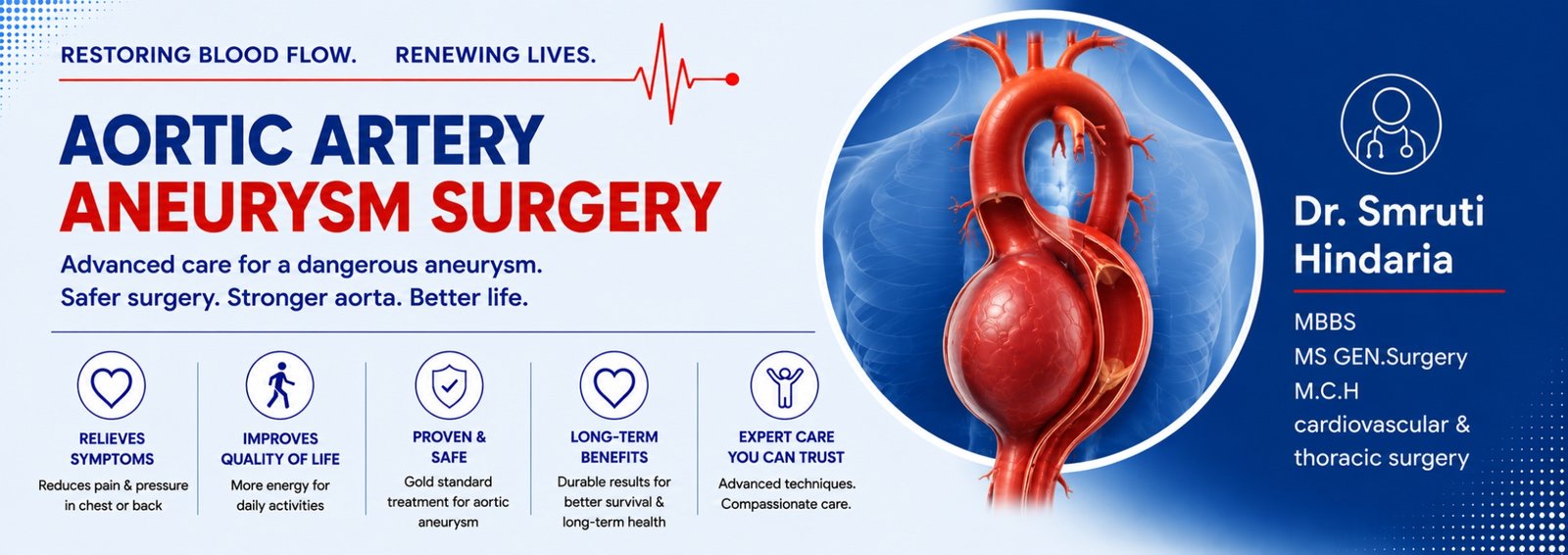
An aortic aneurysm is an abnormal bulge or weakened area in the wall of the aorta, the body’s largest artery, which carries blood from the heart to the rest of the body. If left untreated, an aneurysm can enlarge over time and, in severe cases, rupture — a life-threatening emergency. Aortic Artery Aneurysm Surgery is performed to repair or replace the weakened section of the artery, restoring safe, stable blood flow and significantly reducing the risk of rupture.
When is surgery usually advised? Planned surgery is generally considered when an aneurysm of the ascending aorta or abdominal aorta reaches about 5.0–5.5 cm, grows more than about 0.5 cm in a year, or causes symptoms. The threshold may be lower for patients with Marfan syndrome, a bicuspid aortic valve or a family history of aortic dissection. Smaller aneurysms are usually monitored with regular scans.
About the Surgeon
Dr. Smruti Hindaria
Cardiovascular & Thoracic Surgeon in Pune
- Qualifications: MBBS, MS, MCh (CVTS), Mumbai
- Reg. No.: 2009/03/1024 (Maharashtra Medical Council)
- Experience: 12+ years in practice
Performs bypass surgery (CABG), heart valve repair and replacement, aortic surgery, and minimally invasive and robotic-assisted cardiac surgery. Treatment options, risks and alternatives are explained at consultation before any decision on surgery.
For Appointment: +91 70667 16671How Aortic Aneurysms Are Assessed and Treated at Pune Cardiac Centre
Imaging and risk assessment
CT angiography, MRI or echocardiography are reviewed to measure the aneurysm’s size, location and growth, and to decide between monitoring and surgery.
Choice of repair
Open surgical repair or a less invasive approach is chosen based on the aneurysm’s location and size and the patient’s overall health.
Urgent cases
A rapidly growing or painful aneurysm needs urgent hospital care. Emergency aortic surgery is performed at Pune Cardiac center. If you have sudden severe chest, back or abdominal pain, call 108 or go to the nearest emergency department.
Written cost estimate
A cost estimate is shared before planned surgery.
Conditions Treated
Types of Aortic Aneurysm and Conditions Treated
Surgical treatment may be needed for:
- Thoracic aortic aneurysm (ascending aorta and aortic arch)
- Descending thoracic and thoracoabdominal aortic aneurysm
- Aortic dissection (Type A and Type B)
- Aortic root aneurysm (often with aortic valve disease)
- Ruptured or symptomatic aortic aneurysm (emergency)
Types of Aortic Aneurysm Surgery
The type of repair depends on where the aneurysm is, its size and the patient’s overall health.
Open Aortic Aneurysm Repair
A traditional surgical approach involving direct repair or replacement of the weakened aortic segment with a synthetic graft, suited for complex or larger aneurysms.
Minimally Invasive Aortic Aneurysm Repair
A less invasive technique using smaller incisions and specialized instruments, allowing for a shorter hospital stay and faster recovery in eligible patients.
Emergency Aortic Aneurysm Surgery
Urgent surgery for a ruptured aneurysm or acute aortic dissection, performed in hospital.
Why Aortic Aneurysm Surgery Is Done
Planned aneurysm repair aims to
- Reduce the risk of rupture or dissection — which are life-threatening.
- Replace the weakened section of the aorta with a durable synthetic graft.
- Prevent further enlargement — of the repaired segment.
- Allow surgery to be planned before an emergency. Outcomes of planned surgery are generally better than those of emergency surgery.
Risks of Aortic Aneurysm Surgery
Aortic surgery is major surgery. Risks include bleeding, infection, stroke, kidney problems, irregular heartbeat, breathing problems and, rarely, spinal cord injury (more with descending and thoracoabdominal repair) or death. Risks are higher in emergency surgery than in planned surgery. After repair, regular scans are needed to monitor the rest of the aorta. Your individual risk will be discussed before surgery.
Cost of Aortic Artery Aneurysm Surgery in Pune
The cost of aortic aneurysm surgery in Pune depends on the aneurysm’s size and location, whether surgery is planned or emergency, the type of repair (open surgery or stent-graft), the hospital and room category, and the length of stay. A written cost estimate is provided after evaluation for planned surgery. Health insurance claims and EMI options through finance providers may be available, subject to eligibility.
FAQs
Frequently Asked Questions
An aortic aneurysm is a bulge or weakened section in the wall of the aorta that can enlarge over time and, if untreated, may rupture.
Most aneurysms cause no symptoms and are found during scans for other reasons. Some cause chest, back or abdominal pain, or a pulsing feeling in the abdomen. Sudden, severe tearing pain in the chest or back is an emergency. Call 108 or go to the nearest emergency department.
In open repair, the surgeon replaces the weakened section of the aorta with a fabric graft through an incision. In endovascular repair, a stent-graft is placed inside the aorta through an artery in the groin. Endovascular repair usually means a shorter recovery but needs lifelong scan monitoring and is not suitable for every aneurysm.
Risks include bleeding, infection, stroke, kidney problems, irregular heartbeat and, rarely, spinal cord injury or death. Risks are lower in planned surgery than in emergency surgery, which is why aneurysms are monitored and repaired before they rupture where possible.
Recovery time varies based on the surgical approach and the patient's overall health, but many patients see steady improvement over several weeks under proper post-operative care.
Cost depends on aneurysm severity, surgical approach, and hospital stay. Dr. Hindaria provides a detailed treatment plan and cost estimate after evaluation.
Common causes include high blood pressure, atherosclerosis (hardening of the arteries), smoking, genetic connective tissue disorders, and family history. Age and gender (more common in men over 65) also increase risk.
Small, slow-growing aneurysms that pose low risk may be monitored with regular imaging and blood pressure management instead of immediate surgery. Dr. Hindaria determines the safest approach based on aneurysm size, growth rate, and overall health.
Aortic aneurysms are typically diagnosed through imaging tests such as ultrasound, CT angiography, or MRI, often discovered incidentally during scans for unrelated conditions or through targeted screening in high-risk patients.
Testimonials
What Patients Say About the Best Aortic Artery Aneurysm Surgeon in Pune
Real experiences from patients treated by Dr. Smruti Hindaria for bypass surgery, valve repair, and advanced cardiac care.
"I had no symptoms and only found out about my aortic aneurysm during a routine scan. Dr. Hindaria explained everything calmly and clearly, and the surgery went smoothly. I'm grateful it was caught in time."
Prakash D.
Aortic Aneurysm Repair Patient, Pune
"My father's aneurysm was growing fast and needed urgent surgery. The team acted quickly and kept us informed at every step. His recovery has been steady, and we couldn't have asked for better care."
Meera J.
Family of Aortic Surgery Patient
"After being told I needed aortic surgery, I was nervous about the risks. Dr. Hindaria walked me through the open vs. minimally invasive options and helped me choose what was right for my case. I felt supported the whole way through."
Vikram S.
Aortic Aneurysm Surgery Patient, Pimpri Chinchwad
Watch Expert's Guidance

Our Clinics
Clinic Locations for Aortic Aneurysm Consultation in Pune
the following
Pune Cardiac Centre - Jangali Maharaj Road
Om Chambers, 2nd Floor 206 & 207, Above Panchali Hotel,
Jangali Maharaj Rd, Pune, Maharashtra 411005
Pune Cardiac Centre - Pimpri Chinchwad
B, Gera Imperium Oasis, Survey No. 35/1 + 2/1, 210,
Old Mumbai - Pune Hwy, Pimpri Colony, Pimpri-Chinchwad, Maharashtra 411018