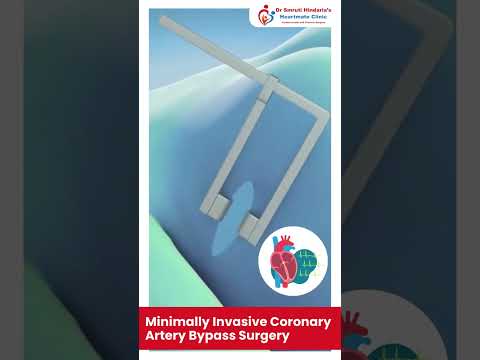

Robotic Heart Bypass Surgery in Pune
Pune Cardiac Centre provides robotic-assisted heart bypass surgery in Pune, performed by Dr. Smruti Hindaria, Cardiovascular & Thoracic Surgeon and Bypass Surgeon in Pune (MBBS, MS, MCh CVTS – Mumbai; Reg. No. 2009/03/1024).
In robotic heart bypass surgery, the surgeon performs coronary artery bypass grafting through small incisions between the ribs, controlling robotic instruments and a 3D camera from a console, instead of opening the breastbone. It is mainly suitable for selected patients who need bypass of one or a limited number of arteries.
Care at the clinic includes review of angiography and heart function, discussion of whether robotic, minimally invasive or conventional bypass is suitable, surgical planning, post-operative follow-up and cardiac rehabilitation guidance. Robotic surgery is performed at Pune Cardiac Center
What Is Robotic Heart Bypass Surgery?
Robotic Heart Bypass Surgery is a form of coronary artery bypass grafting performed with the assistance of a robotic surgical system. Rather than making a large incision through the sternum, the surgeon operates through a few small incisions in the chest wall, guiding robotic instruments and a high-definition 3D camera from a console to graft a healthy blood vessel onto the blocked artery, improving blood flow to the heart muscle to the heart muscle.
This technique is particularly suited to patients requiring bypass of one or a limited number of coronary arteries and can, in select cases, be combined with other minimally invasive cardiac procedures, depending on the patient’s anatomy and overall cardiac health following a detailed evaluation.
About the Surgeon
Dr. Smruti Hindaria
Cardiovascular & Thoracic Surgeon in Pune
- Qualifications: MBBS, MS, MCh (CVTS), Mumbai
- Reg. No.: 2009/03/1024 (Maharashtra Medical Council)
- Experience: 12+ years in practice
Performs bypass surgery (CABG), heart valve repair and replacement, aortic surgery, and minimally invasive and robotic-assisted cardiac surgery. Treatment options, risks and alternatives are explained at consultation before any decision on surgery.
For Appointment: +91 70667 16671Before and After Robotic Bypass Surgery at Pune Cardiac Centre
Checking suitability for robotic surgery.
Your angiography, heart function, chest anatomy and lung function are reviewed to decide whether robotic bypass is suitable, or whether minimally invasive or conventional CABG is the better option.
Hospital-based robotic surgery
Robotic bypass is performed at [hospital name], using a robotic surgical system with 3D visualisation.
Pain management and rehabilitation
Pain relief after surgery, follow-up visits and guidance on a gradual return to activity.
Written cost estimate
A cost estimate is shared before surgery, based on the technique, hospital and length of stay.
Who May Be Suitable for Robotic Bypass Surgery?
Robotic bypass may be considered for patients with:
- Blockage in a single coronary artery, especially the LAD (left anterior descending artery)
- Select Cases of Multi-Vessel Coronary Disease
- Blockages not suitable for angioplasty or stenting
- Angina that continues despite medication
Robotic bypass is generally not suitable for patients who need several grafts, or who have very poor heart function, severe lung disease, previous chest surgery or unsuitable chest anatomy. For these patients, conventional or minimally invasive CABG may be recommended.
Our Procedures
Types of Robotic Heart Bypass Surgery
The robotic technique used depends on the number and location of blockages.
Totally Endoscopic CABG (TECAB)
Bypass performed entirely through small ports in the chest using robotic instruments. It is used for carefully selected patients. .
Robotic-Assisted MIDCAB
The robot is used to harvest the internal mammary artery from inside the chest, and the graft is connected through a small incision between the ribs, usually on a beating heart.
Hybrid Robotic Bypass with Angioplasty
Robotic bypass of the LAD artery combined with angioplasty and stenting of other blocked arteries, planned together with a cardiologist.
On-Pump or Off-Pump Robotic Bypass
Performed either with the heart supported by a bypass machine or on a beating heart, depending on the complexity of the blockages and the patient's overall condition.
Possible Benefits of Robotic Bypass Surgery
Compared with conventional open bypass surgery, robotic bypass may offer the following for suitable patients:
- No division of the breastbone — the surgery is done through small incisions between the ribs.
- Less blood loss and a lower chance of needing a transfusion.
- Shorter hospital stay for many patients.
- Earlier return to daily activities and drivingwithout breastbone healing restrictions.
- Less pain after surgery as reported by many patients. .
- Smaller scars.
- Lower risk of breastbone wound infection, because the sternum is not divided.
Risks and Limitations of Robotic Bypass Surgery
Robotic bypass carries the same main risks as other bypass surgery: bleeding, infection, irregular heartbeat, stroke, kidney problems, heart attack and, rarely, death. In some cases the surgeon may need to convert to conventional open surgery during the operation for safety. The operation may take longer than conventional bypass, and robotic bypass is suitable only for selected patients, usually those needing one or two grafts. Your surgeon will explain your individual risks before surgery.
Cost of Robotic Heart Bypass Surgery in Pune
The cost of robotic heart bypass surgery in Pune depends on the number of grafts, the robotic technique (robotic MIDCAB, TECAB or hybrid), the hospital and room category, the length of stay and any tests required. Robotic surgery usually costs more than conventional bypass because of the robotic system and its instruments. A written cost estimate is provided after evaluation. Health insurance claims and EMI options may be available, subject to eligibility and policy terms.
Cost of Robotic Heart Bypass Surgery in Pune
FAQs
Frequently Asked Questions
It is a form of coronary bypass surgery in which the surgeon uses robotic instruments through small incisions between the ribs to graft a blood vessel around a blocked coronary artery.
Patients with a blockage in one or two coronary arteries, especially the LAD, with suitable heart and chest anatomy and adequate lung function, may be suitable. The decision is made after reviewing angiography, heart function and overall health. .
In conventional bypass, the breastbone is divided to reach the heart. In robotic bypass, the surgeon works through small incisions between the ribs, using robotic instruments. Robotic bypass usually means a shorter hospital stay and less blood loss for suitable patients, but it is suitable only for selected cases and may take longer to perform.
Both avoid a full opening of the breastbone. In minimally invasive bypass (MIDCAB), the surgeon works directly through a small incision. In robotic bypass, robotic instruments and a 3D camera are used for part or all of the operation, especially to harvest the chest artery used as the graft.
Many patients go home sooner than after conventional bypass surgery, often in about [3–5] days, but the exact duration depends on individual recovery and overall health.
Many patients resume light daily activities sooner than after open-heart surgery, often within 2–4 weeks. Full recovery depends on overall health, the number of grafts and following the rehabilitation plan.
Like any heart surgery, it carries risks including bleeding, infection, irregular heartbeat, blood clots, stroke and the possible need to convert to open surgery for patient safety. Your surgeon will discuss these risks before the procedure.
Robotic bypass is done through a few small incisions between the ribs, so the scars are usually much smaller than with traditional open-heart bypass surgery.
Age alone does not determine eligibility. Many older adults may qualify if their overall health, heart function and coronary anatomy are suitable. A detailed evaluation helps decide the most suitable treatment.
The cost depends on the number of grafts, the robotic technique, the hospital and the length of stay. It is usually higher than conventional bypass. A written cost estimate is given after evaluation, and insurance and EMI options may be available.
Testimonials
What Patients Say About Robotic Heart Bypass Surgery in Pune
Real experiences from patients treated by Dr. Smruti Hindaria for Robotic Heart Bypass surgery, valve repair, and advanced cardiac care.
""I needed bypass surgery but was worried about a long recovery. Dr. Hindaria recommended the robotic approach, and I was back home and moving around far sooner than I expected. "
Deepak M.
Robotic Bypass Patient, Pune
"My husband's bypass was done robotically, and the small incisions made such a difference in his recovery compared to what we feared with open surgery. The team's care was excellent throughout."
Kavita P.
Family of Robotic Bypass Patient, Pimpri Chinchwad
"Dr. Hindaria walked us through why the robotic bypass option made sense for my case. The precision of the surgery and the shorter hospital stay made all the difference in my recovery."
Nitin S.
Robotic Bypass Patient, Pune
Watch Expert's Guidance

Our Clinics
Clinic Locations for Robotic Bypass Surgery Consultation in Pune
the following
Pune Cardiac Centre - Jangali Maharaj Road
Om Chambers, 2nd Floor 206 & 207, Above Panchali Hotel,
Jangali Maharaj Rd, Pune, Maharashtra 411005
Pune Cardiac Centre - Pimpri Chinchwad
B, Gera Imperium Oasis, Survey No. 35/1 + 2/1, 210,
Old Mumbai - Pune Hwy, Pimpri Colony, Pimpri-Chinchwad, Maharashtra 411018